
What is my BMI? What does BMI mean?
Here’s everything you need to know about BMI. What it is – and what BMIs are considered ‘overweight’ or ‘obese’ according to this clinicial measure.
What BMI is classed as overweight or obese? | What are the limitations of BMI? | What’s the solution?
The World Health Organisation (WHO, 1998) promotes BMI as a crude measure for weight judgement.
It was sometimes known as the ‘Quetelet index’. BMI stands for ‘Body Mass Index’.
The equation for BMI is your weight in kilograms divded by your height in metres squared.
This allows for comparisons between groups and genders by controlling for height (Deurenberg and Roubenoff, 2002).
A BMI greater than 25 is classed as overweight – and the numbers are broken into thresholds – also known as ‘cut-offs;;
- 30-34.9 obese class I,
- 35-39.9 obese class II
- and >40 obese class III – this would be at the top end of ‘morbidly obese’.
The issue with the BMI calculation is that it is not easy to calculate for the general population, or at least, to remember the formula.
It does not differentiate between fat mass, and non-fat mass, it gives no indication of how bodyfat is distributed, and gives no indication of skeletal muscle mass.
It comes with a risk of misclassification individuals.
You would have heard of the classic example of bodybuilders being classed as overweight according to their BMI calculation; however no consideration for the amount of non-fat mass is being borne in the calculation.
Similarly, those who have a ‘normal’ BMI may have high subcutaneous body fat, or suffer from sarcopenic obesity.
Sarcopenia describes a process whereby as we age we lose muscle mass and our body composition becomes less favourable.
Lastly, BMI does not consider ethnicity differences, such as in the South Asian population who are characterised by a shorter height, more central fat mass distribution, lower skeletal muscle mass when compared to Europeans.
In recognition of these ethnic differences, the BMI thresholds have been adjusted to >23 compared to 25 in White European populations – in the South Asian population in this example.
So what can we do? It is best to combine BMI with another simple measure, and one of those is ‘waist circumference’.
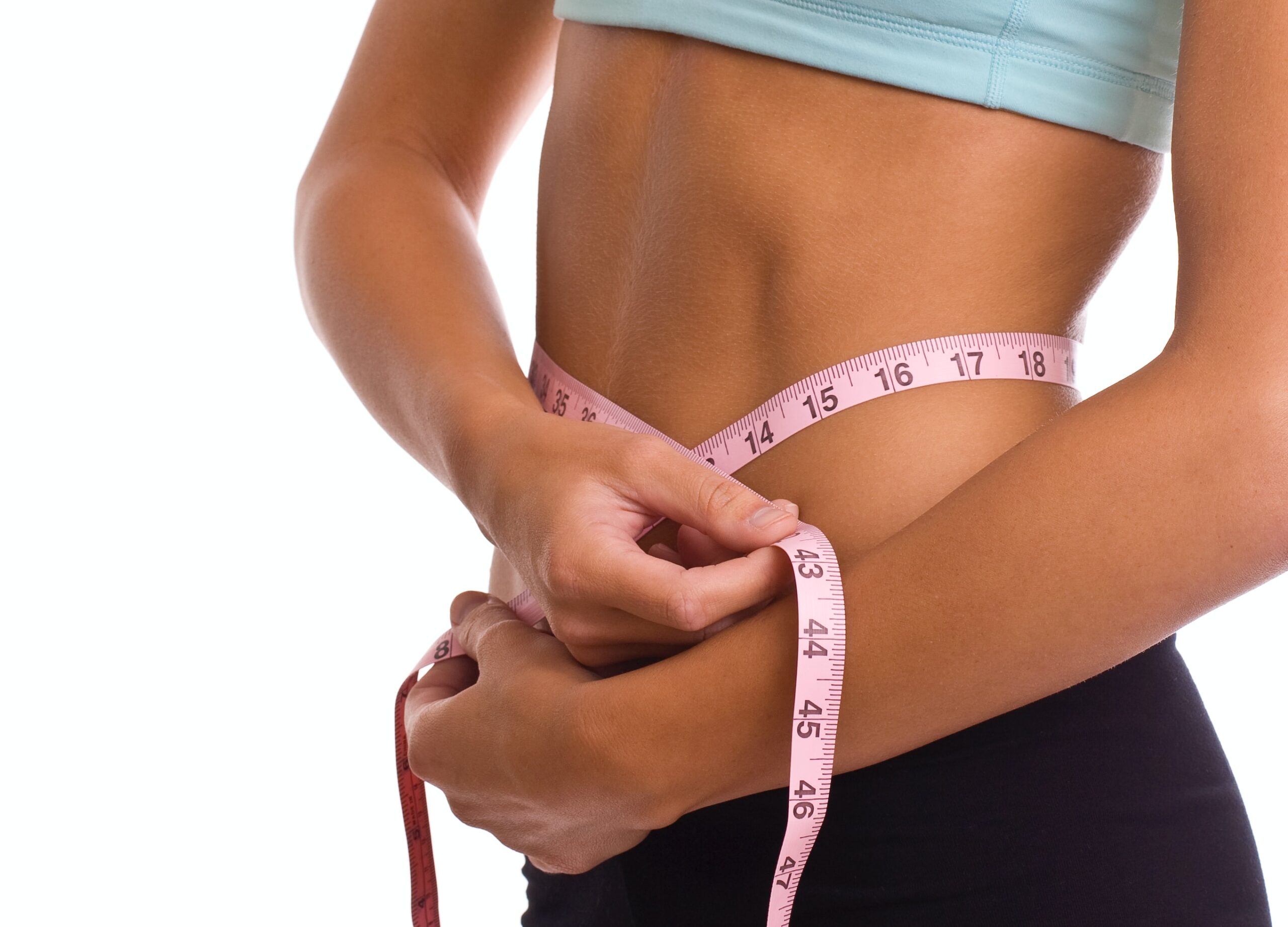
A simple tape measure can be used to measure waist circumference and the value can be recorded.
Waist circumference is a measure of central adiposity (fat around the middle), and increased central adiposity is associated with increased blood pressure, cardiovascular risk, insulin resistance and type 2 diabetes.
Cut-off measures (thresholds) have been developed to reflect ethnic / cultural differences and a waist circumference of greater than 94cm in men, and 80cm for females is the threshold for Europeans.
When combined with BMI – health risk tables can be developed (McCarthy, 2018).
Other options are to use a ‘bio-impedence machine’ or ‘BIA machine’, and this will report your bodyfat percentage i.e. the amount of your fat mass expressed as a percentage of your weight.
However, even this can be imperfect as at best, this figure is a prediction, based on algorithms of certain populations and not a true representation.
If you have the funds, your next option could be a ‘DEXA’ scan.
This is the gold standard – a reference method in research.
Originally used to assess bone mineral density, this tool has evolved to capture fat mass, lean muscle and the like.
There a number of clinics which offer DEXA scans, and usually, this is only used by elite athletes. For the general public, it can be expensive to get measured by this method, but prices are coming down.
In short, if you have a higher BMI and higher waist circumference, you’re more exposed to health risks and should take remedial action.
Note; there is no standardised way to take waist circumference.
If you take your waist circumference, then one way is to stand with your feet shoulder width apart.
Relax. Place the tape around your waist between the top of your hip bones, and the bottom of your last ribs, at the narrowest point.
Have the tape flat a round your body, not pinching the skin.
Whatever method you use, it’s probably best to use the same approach, to help reliability in taking the measurement.
Other related blog articles you may wish to read:
Waist-to-height ratio – a simpler tool to assessing obesity risk
Summary of paper about cravings and dietary lapse
REFERENCES:
Deurenerg, P. & Roubenoff, R. (2002). ‘Body Compostion’, Gibney, M.J, Vorster, H.H, and Kok, F.J. (eds) Introduction to Human Nutrition, Oxford: The Nutrition Society, Blackwell Publishing pp. 22-23.
McCarthy, D.H. (2018) ‘Assessment of Nutritional Status in Public Health Nutrition settings’. Butriss, L. J., Welch, A.A., Kearney, J.M., Lanham-New, S.A. (eds.) Public Health Nutrition. Oxford: The Nutrition Society, Blackwell Publishing. pp. 106-123.
World Health Organisation. (1998) ‘Obesity – preventing and managing the global epidemic’. Geneva. WHO,
Recent Comments